Slipcovers and Sacraments: How Horror Fans Became the Last True Archivists
There is a specific sound a shrink-wrapped 4K disc makes when you slide it off a shelf, and if you have spent any time in a horror collector's group this fall, you already know it is the sound of somebody's October getting better. On a Tuesday night in November, in a den in Ohio or a studio apartment in Portland, a person is opening a package containing a restored print of a movie they have already seen eleven times. They are not doing this because they lack access. Most of these films are streaming somewhere. They are doing it because access is not the same thing as having.
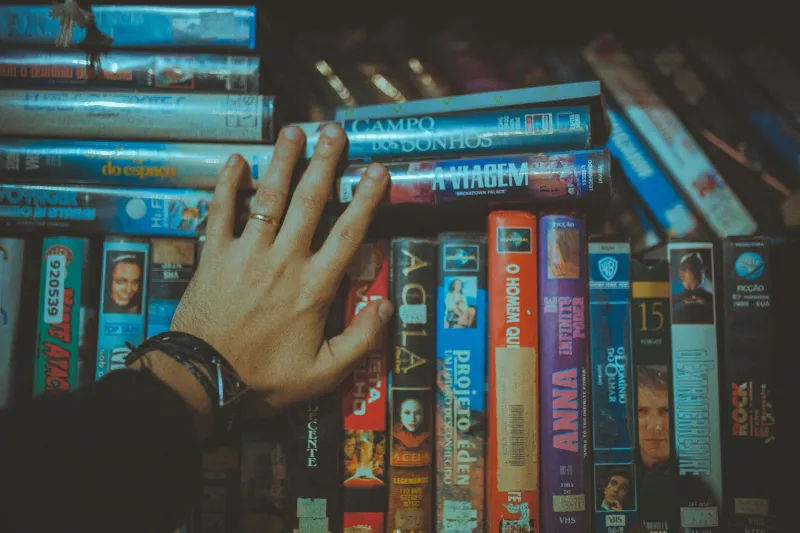
That distinction has turned the boutique Blu-ray and 4K market into one of the most reliable corners of physical media in the US, and horror is doing a disproportionate amount of the lifting. Walk into any collector's thread and you will find the same vocabulary: spine numbers, slipcovers, O-cards, limited runs of 3,000, region-free players, and the quiet dread of a delisting notice.
The Delisting Anxiety Is Not Paranoia
Every streaming service has a rotating door, and horror fans have learned to read the exit signs. Titles vanish mid-October, reappear on a different platform in February, then disappear entirely because a rights holder changed hands or a distribution deal lapsed. For a casual viewer this is an annoyance. For a genre fan it is a small trauma, because horror's back catalog is unusually fragmented. Independent labels, foreign rights holders, estates, and orphaned negatives mean the same movie can be simultaneously unavailable, available in a butchered cut, and available in a beautiful restoration that only exists on a disc pressed four years ago.
That is the emotional engine behind the collector boom. Buying a disc is not just a purchase, it is a hedge. It is a way of saying: this one is not going to disappear on me in the middle of a themed marathon on October 27.
Inside the Label Economy
What makes the current wave different from the DVD gold rush of the 2000s is the craftsmanship. Boutique labels have turned restoration into a spectator sport. A new 4K scan from the original camera negative, a corrected aspect ratio, a color grade supervised by someone who actually worked on the film, an audio commentary recorded with three people who barely survived the shoot, a booklet with an essay and a reversible cover, and a rigid slipcase with art commissioned from a working illustrator. That is the standard now, and collectors notice when it slips.
The result is a market built on small runs and long memories. A limited edition sells out in a pre-order window measured in hours, then turns up on resale sites at a markup that would make a ticket scalper blush. Some of that is speculation. Most of it, honestly, is devotion. People are not hoarding these discs to flip them. They are building a shelf that functions like a personal museum, and the numbering system on the spine turns a movie collection into something with a shape.
The October Shelf Is a Real Thing
Ask a collector to explain their organization system and you will get an answer that sounds like a librarian with a grudge. Alphabetical by title, except the October shelf, which is seasonal and sacred and rearranged every year. The Halloween titles get their own row. The Christmas horror gets its own corner. The stuff that is too mean for a party gets filed where guests will not wander into it looking for a comedy.
That shelf is a ritual object. Putting the disc in the player, sitting through the trailers you have chosen not to skip, choosing the original mono track over the remix, watching the commentary at 11 p.m. with a bowl of candy corn because you are an adult and nobody can stop you. Streaming cannot replicate that sequence of small decisions. It is too frictionless. The friction is the point.
The Honest Counterarguments
None of this is free. A single boutique 4K can cost as much as two months of a streaming subscription, and a serious collection can run into the thousands. Discs scratch. Players die. Manufacturers stop making them. There is the genuine specter of disc rot, and the less dramatic but more common problem of a player that will not read a disc pressed in a different region. Anyone who tells you physical media is a permanent guarantee is overselling it.
But the alternative is a license that expires. And the collectors are not wrong that the difference matters, because the difference is visible in the product. A restored disc with a commentary track is a document. It is an argument about why the movie mattered, made by people who cared enough to make it. When a streamer drops a film, that argument vanishes. When a label ships a disc, it stays on a shelf in somebody's house.
Preservation as Fandom
What is happening in horror right now is not nostalgia. It is people with jobs deciding that the movies that scared them into becoming who they are deserve better than a thumbnail in a rotating carousel. They are buying hard drives, sure. But they are also buying booklets, essays, and evidence that somebody went back to the negative and did the work.
So the next time a limited edition sells out in ninety minutes and the comment sections fill with complaints, remember what is actually happening. A small label took a chance on a weird, ugly, beloved movie, and thousands of people in the United States proved the market for it exists. That is not consumerism gone feral. That is fandom doing the archiving. And in a business where catalog titles are treated as tax write-offs, the shelf in somebody's living room might be the safest place a horror movie has left.