Main Street Has a Secret: Why Horror Can't Stop Terrifying Small-Town America
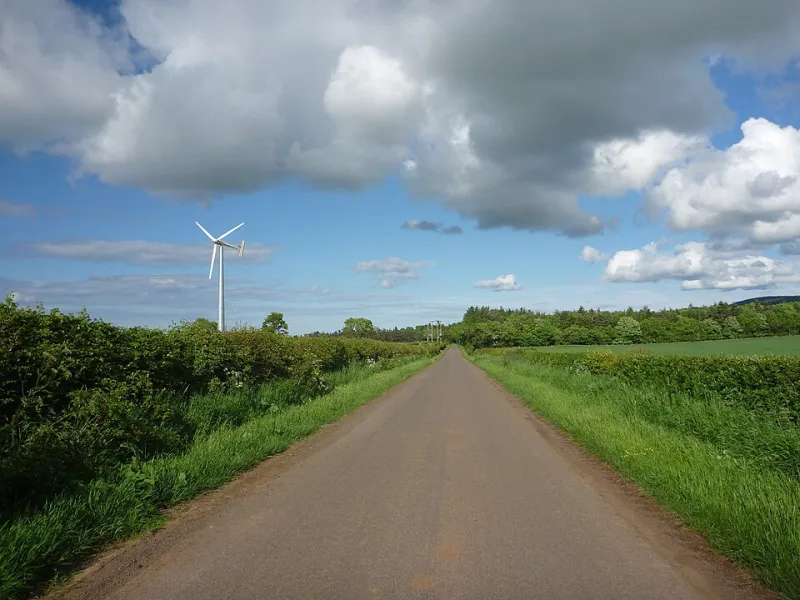
Photo: Richard West , CC BY-SA 2.0, via Wikimedia Commons
There's a particular kind of dread that doesn't come from a haunted asylum or a gothic castle. It comes from a water tower with the town's name painted on it, a four-way stop, and a diner where the coffee is hot and everybody's smiling a little too wide.
Rural horror — call it folk horror, call it Americana-gone-wrong — has quietly become one of the most reliable subgenres on every streaming platform. And every October, we queue it up like it's a ritual. Because, well, it kind of is.
The Corn Did It First
If you want to trace the lineage, start in Nebraska. Children of the Corn (1984) took the most wholesome image in American life — kids, farmland, a church social — and rotted it from the inside. Isaac and Malachai didn't need a jump scare. They needed a cornfield and a congregation.
The movie itself is admittedly uneven (the sequels went full direct-to-video fever dream), but the idea stuck like a burr on a saddle. Small towns aren't just places. On screen, they're pressure cookers. Everyone knows everyone. No one leaves. And when something goes wrong, the whole community closes ranks.
That's the engine of the whole subgenre: isolation by consensus. In a city slasher movie, you can disappear into a crowd. In a rural horror movie, the crowd is the monster.
Why City Slickers Love Watching the Heartland Suffer
Here's the slightly uncomfortable part. A huge chunk of the audience for these films lives in suburbs and metros — people whose closest brush with a cornfield is the state fair funnel cake line.
So what's the appeal?
The unknown is scarier than the dark. Urban audiences treat the countryside the way earlier generations treated Transylvania: a place where the rules don't apply and nobody can hear you scream. A gas station attendant with too many questions lands differently when you've never actually been to a gas station that isn't attached to a Sheetz.
It's a fantasy of consequence. Small-town horror is often about community — enforced belief, inherited guilt, traditions nobody explains to outsiders. For viewers who can move cities on a whim, a place where you can't leave is genuinely alien. That's horror gold.
Nostalgia with a knife in it. County fairs, drive-ins, harvest festivals — these images are pure Americana comfort food. Corrupting them hits twice as hard because we already love them.
The Modern Wave: Folk Horror Goes Streaming
The last decade supercharged the formula. The Witch proved audiences would sit through 17th-century Puritan dialogue if the dread was thick enough. Ari Aster's Midsommar moved the nightmare to broad daylight — a lesson in how horror doesn't need darkness, just isolation. And films like The Ritual (okay, that one's Swedish woods, but the DNA is the same) showed streaming platforms there was an appetite for communities with secrets.
Stateside, the trend got louder. The Wicker Man's spiritual grandchildren are everywhere: harvest festivals with hidden agendas, towns that worship something older than the church on Main Street. Even elevated horror's quieter cousins — think It Follows' anonymous Michigan suburbs or the backwoods dread of Deliverance's many descendants — share the same thesis: the map ends where the pavement does, and that's where the trouble starts.
Your Americana-Gone-Wrong Watchlist
Ready to be scared off two-lane highways for a season? Queue these up:
- Children of the Corn (1984) — The granddaddy. Skip the sequels, respect the origin.
- The Witch (2015) — Not American, but the blueprint for the modern folk-horror revival.
- Midsommar (2019) — Sunshine, flower crowns, and communal horror. Bring a buddy.
- Deliverance (1972) — The movie that made a generation nervous about canoe trips.
- The Wicker Man (1973) — The British import that wrote the rulebook every rural horror film still follows.
- Hush (2016) — Rural isolation meets home invasion, minus the community angle but maxing out the alone-in-the-woods panic.
- Tucker & Dale vs. Evil (2010) — The comedy that lovingly roasts the entire subgenre. Perfect palate cleanser.
- Pet Sematary (1989) — Because sometimes the small town is your own town, and the ground remembers.
The Road Doesn't End
The subgenre isn't slowing down. Streaming services keep greenlighting low-budget rural horror because the settings are cheap, the atmosphere is free, and audiences keep clicking. Expect more harvest festivals, more towns with one road in, and more outsiders who really, really should have kept driving.
So this October, when the credits roll and you glance out the window at your well-lit street, take a small comfort in the asphalt. Out there, past the last exit, somewhere a church bell is ringing, the corn is tall, and everybody in town is very glad you came.
They've been waiting.