Your Kid's Ghostface Costume Is Doing More for Horror Than Any Trailer Ever Will
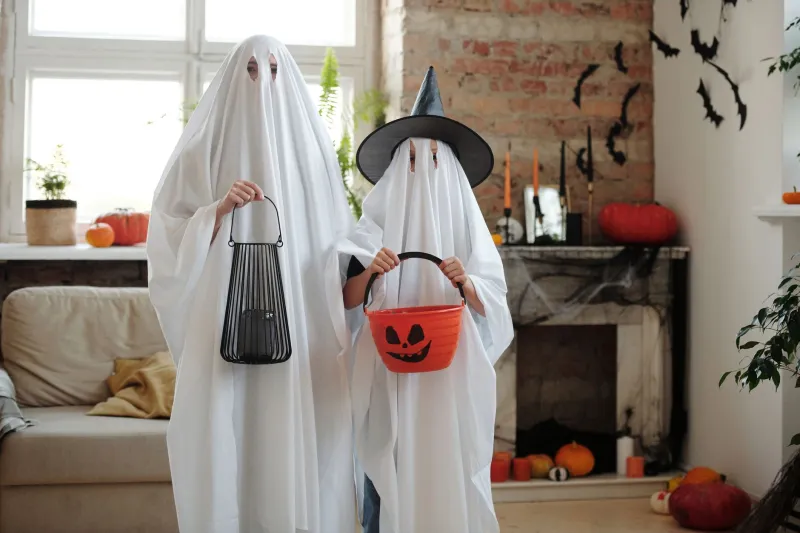
Somewhere on a suburban cul-de-sac this October, a nine-year-old in a Spirit Halloween Ghostface robe is about to scream "what's your favorite scary movie?" at a bewildered neighbor. That kid's parent paid $34.99 for the privilege. A studio marketing department paid nothing — and got better audience data than any focus group money can buy.
We spend a lot of time on this site talking about trailers, tracking, and streaming numbers. But the most underrated force in horror commerce doesn't run on any screen. It walks door to door one night a year, holding a plastic pumpkin.
The Porch Is the Focus Group
Think about what a Halloween costume actually is from a studio's perspective: a consumer voluntarily paying to become your intellectual property, then publicly performing brand awareness for hours. No ad skip button. No algorithm burying it. Just a kid in a Michael Myers mask standing under a porch light while an entire neighborhood absorbs the imagery.
That mask, by the way, has its own origin story — a modified Captain Kirk mask from 1975 that cost the Halloween production under twenty bucks. It went on to become one of the most recognizable faces in America, and every October it shows up on thousands of doorsteps whether there's a new movie in theaters or not. That's the dream scenario for any franchise: cultural presence that doesn't require a marketing spend.
The costume aisle is essentially a live poll. If kids are still dressing as Pennywise two years after the last It movie, the brand has heat. If a killer's silhouette stops showing up on porches, executives notice that too.
Spirit Halloween: The Unofficial Greenlight Committee
Here's where it gets genuinely strange. Spirit Halloween — the pop-up retailer that colonizes every abandoned Bed Bath & Beyond in America each September — holds official licenses for a staggering number of horror properties. Ghostface, Chucky, Michael Myers, Leatherface, the Terrifier clown Art, Sam from Trick 'r Treat. When a studio wants to know if a reboot has legs, one of the questions worth asking is: did Spirit order a full line for this character?
Costume licensing works on volume commitments. Retailers don't dedicate prime real estate to properties they don't believe will move units. So when a costume deal gets struck for a legacy franchise, that's not just merchandising — it's a private signal about market confidence. The costume pipeline and the greenlight pipeline are fed by the same data.
And the influence runs both directions. Terrifier is the cleanest recent example: a micro-budget splatter film whose villain, Art the Clown, built his following largely on costumes, TikTok clips, and word-of-mouth spectacle. Three films later, it's a nine-figure franchise. Art's creepy grin on a costume rack in a Kansas strip mall did promotional work no theatrical campaign could have bought.
Kids Are the Long Game
There's an argument that horror marketing to children is a relatively new cynicism. It isn't. Kids have always been the industry's sleeper agents.
Generational fandom gets seeded early. The Gen X kids who wore rubber Freddy Krueger gloves to school in 1987 became the adults who bought opening-night tickets to every Nightmare revival. Millennials who trick-or-treated as Scream's Ghostface in the late '90s showed up for the 2022 legacy sequel in droves — and brought their own kids, some of whom were wearing tiny Ghostface robes.
Studios understand this math. A costume sold this October is a ticket sold fifteen Octobers from now. Horror is uniquely suited to this long play because its icons are simple, wearable, and repeatable: a mask, a striped sweater, a jumpsuit. You don't need a costume budget of thousands. You need a robe and a knife made of obvious plastic.
The Reboot Report Card, Delivered by Trick-or-Treaters
So what does this mean for next year's slate? Watch the sidewalks.
If a legacy property's costume sells through early and you're seeing knockoffs at the drugstore by mid-October, expect a reboot announcement within eighteen months. If a character needs a name tag — "hi, I'm the villain from that streaming movie you half-remember" — the franchise is cooling. The porch light test never lies.
There's also a downstream effect on what gets made. Characters that translate well to costume design — visually bold, mask-friendly, silhouette-first — have a merchandising advantage that quietly shapes which concepts get financed. A killer whose face is a blank white mask will always out-merchandise a villain whose horror lives in ambiguity. That's part of why the same handful of icons recycle endlessly while fresher, harder-to-wear terrors struggle to break through.
One Night, Infinite Advertising
Here's the part that should genuinely amaze you: all of this costs the studios essentially nothing after the licensing deal. Halloween is a decentralized, self-funded, nation-wide advertising campaign. Families buy the costumes. Kids perform the brand. Neighbors absorb it. The whole thing repeats annually with built-in nostalgia momentum, no media buy required.
No trailer gets replayed by millions of children unprompted for weeks. No Super Bowl spot turns into a game kids invent at recess. Halloween does that for horror, every single year, rain or shine.
So when you open your door this October 31st and a small Ghostface demands candy, take a second to appreciate what you're actually looking at: the most efficient marketing machine in the genre, working its shift. The kid doesn't know they're part of the machine. They just want the full-size Snickers.
Give it to them anyway. The industry depends on it.