The Neighbors Are Used to It: Life Inside America's Most Famous Horror Movie Houses
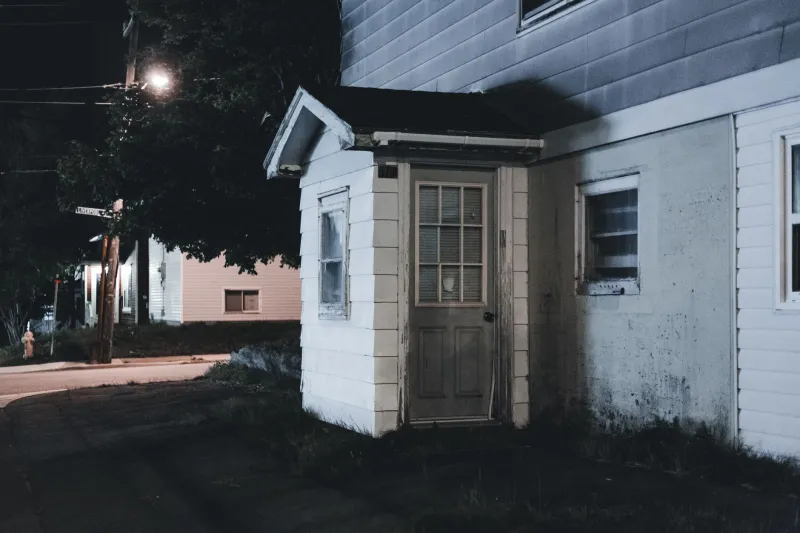
Every horror fan has a mental map of the movies. The Myers house sits on a quiet street. Freddy's boiler room hums somewhere under Elm Street. Regan's bedroom window glows at the top of those Georgetown steps. What most fans don't realize is how much of that map is real — actual houses, on actual streets, with actual people who get their mail delivered to the most famous facades in genre history.
And the people inside those houses? They've got stories.
The Myers House: From Abandoned to Almost a Landmark
The home that launched a franchise sits at 709 Meridian Avenue in South Pasadena, California. In 1978, John Carpenter's low-budget crew showed up with a $325,000 movie and a mask they'd bought for under two bucks. The house itself was a rental property that had seen better decades — the production dressed it up just enough to look like a place where evil might take root.
After filming, the house did what old California houses do: it sat there. By the 1990s it was in rough shape, and in 1998 it was actually moved a few blocks to 1000 Mission Street, where new owners converted it into offices for a window treatment business. Yes — for a stretch of time, you could buy blinds inside the birthplace of Michael Myers.
The house has since been restored to a more period-appropriate look, and fans still make the pilgrimage, especially around Halloween. Current occupants have generally taken a live-and-let-live approach to the fame, though the neighborhood association's patience gets tested every October when the street fills up with people in coveralls.
The lesson in horror real estate: proximity to a legend is a mixed blessing. Ask anyone on Meridian Avenue.
The Exorcist Steps: The House That Watches the Stairs
Technically, the most famous part of The Exorcist (1973) isn't the house at all — it's the 75 steps at the corner of Prospect Street and M Street NW in Georgetown, where Father Karras takes his final tumble. The steps are public property, which means the pilgrimage never stops. They've even got an official historical designation now, which is a very Washington, D.C. way of saying "yes, a demon movie happened here."
The house itself, at 3600 Prospect Street NW, is a real residence. The famous bedroom window where Regan's head does its thing was actually a set piece attached to the facade for filming, then removed. The production also built a fake wing over the adjacent stairway to stage the fall — movie magic doing the heavy lifting behind one of cinema's most believable locations.
Georgetown being Georgetown, the house has changed hands quietly and expensively over the decades. The owners don't do tours. The steps, however, are free, and on Halloween night you'll find a crowd reenacting the fall with varying degrees of safety and dignity.
1428 Elm Street: The House That Moved Too
Freddy Krueger's childhood home — the facade where Nancy Dane lives in the 1984 original — is at 1428 North Genesee Avenue in Los Angeles, standing in for the fictional Elm Street. The actual filming location is a modest Venice-style home that has been renovated and, like the Myers house, physically relocated at one point to protect it from demolition.
Here's what's interesting about the Elm Street house: it doesn't advertise. No plaque, no gift shop, no neon glove on the mailbox. It looks like a normal L.A. home, which is exactly why it worked on screen. The owners over the years have mostly kept a low profile, which hasn't stopped dedicated fans from finding it — horror location hunters have mapped this house to the exact address for decades.
The Fan Economy of Famous Facades
There's a whole subculture built around these houses — location scouting blogs, Google Maps pin swaps, and annual Halloween meetups that the neighbors either embrace or endure. A few of these homes have leaned in over the years: the A Christmas Story house in Cleveland went full tourist attraction, and while that's not a horror film, it's the blueprint some horror homeowners have studied.
Most, though, choose privacy. And honestly, that's the respectful read of the situation: these are homes, not museums. The unwritten rules of horror tourism are simple — stay on the sidewalk, no trespassing, no peeking in windows, and absolutely do not recreate the movie on someone's lawn at 2 a.m.
Planning Your Own Pilgrimage
If you're mapping a horror house road trip (and we've done exactly that), here's the etiquette checklist:
- Photograph from public property only. Sidewalks and streets are fair game; driveways are not.
- Visit in daylight. Nobody wants strangers photographing their house at midnight, even if it is Halloween.
- Skip the costumes at residential locations. Save the Michael Myers cosplay for conventions and the actual public events.
- Support the businesses that do welcome fans. Some horror-adjacent spots — like the Twin Peaks diner in Washington state — actively court visitors. Spend your money there.
The houses made the movies, but the movies made the houses immortal. The people living in them are just keeping the lights on — and occasionally, we suspect, checking the closet twice.